Exploring the Role of Tool Steels in Hydraulic Component Durability
Understanding Tool Steels in Hydraulic Component Machining
What are Tool Steels?
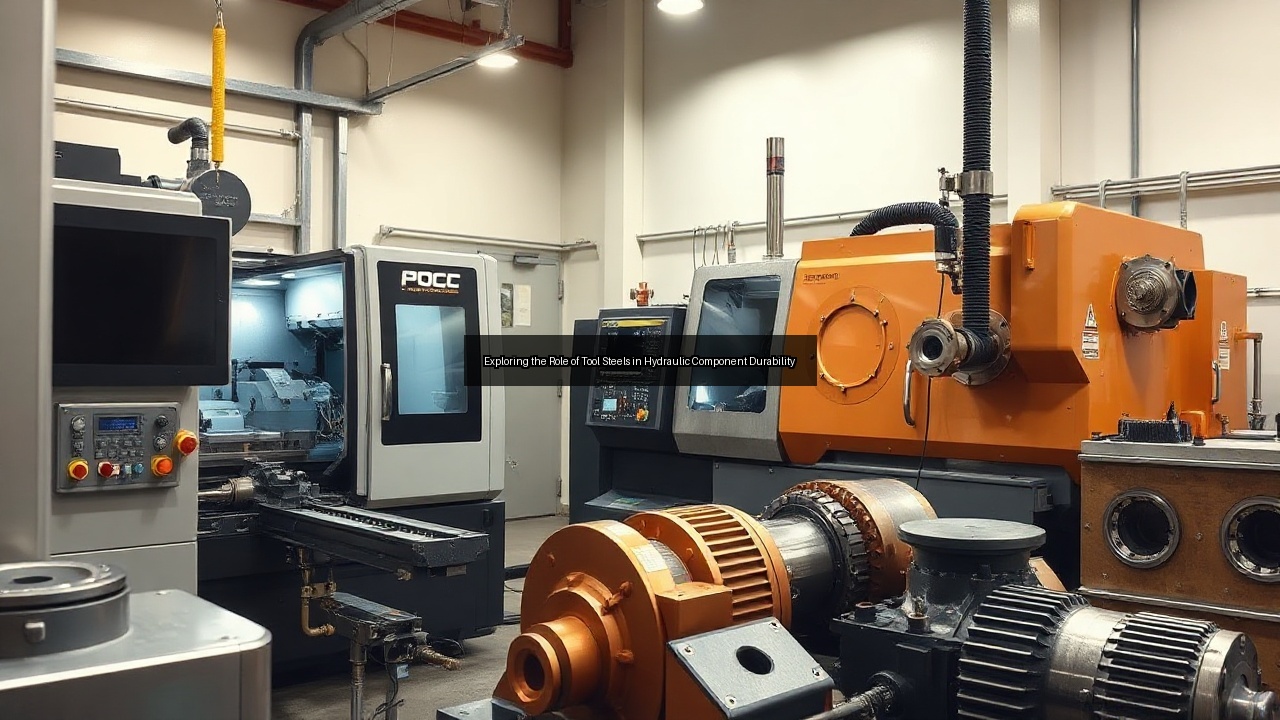
Tool steels deliver the hardness and toughness required for hydraulic component machining. These high-carbon alloys resist deformation under extreme pressure while maintaining sharp cutting edges during prolonged production runs. Engineers choose grades like A2 or D2 because they handle the repeated impact that occurs when shaping spools, pistons, and valve bodies from forgings. The material’s ability to retain strength at elevated temperatures prevents tool failure that would otherwise interrupt hydraulic equipment manufacturing cycles. Proper heat treatment further enhances machinability without sacrificing the wear resistance that extends component life in demanding fluid power applications.
Tool steels are high-carbon, high-alloy materials specifically engineered for cutting, forming, and shaping other metals under severe conditions. Their composition typically includes elements such as chromium, vanadium, molybdenum, and tungsten, which form hard carbides that enhance edge retention and abrasion resistance. In hydraulic machining, where components like directional control valves and accumulator pistons must be produced from tough forgings, these properties translate directly into fewer tool replacements and more consistent part geometries. Heat treatment processes, including austenitizing, quenching, and multiple tempering cycles, allow manufacturers to fine-tune the balance between hardness (often 58–62 HRC) and toughness, ensuring tools withstand both continuous cutting forces and intermittent shocks without chipping or cracking.
Types of Tool Steels Used in Hydraulic Systems
Manufacturers rely on several tool steel families for hydraulic component machining. High-speed steels excel in CNC lathe operations on small-diameter pistons where rapid material removal matters. Powder metallurgy grades offer superior toughness for machining centers that cut large valve housings from stainless forgings. Cold-work steels provide the corrosion-resistant properties needed when producing components exposed to aggressive hydraulic fluids. Each type balances hardness with grindability, allowing shops to achieve tight tolerances on sealing surfaces that directly influence system efficiency and leakage prevention across automotive, construction, and marine equipment.
High-speed steels such as M2 and M42 are favored for their red-hardness, enabling cutting speeds up to 60 m/min on alloy steel pistons without losing temper. Powder-metallurgy grades like ASP 23 or Vanadis 4 deliver uniform carbide distribution, reducing the risk of catastrophic failure when milling large, complex valve manifolds. Cold-work tool steels, including A2, D2, and DC53, are selected when components will encounter water-glycol fluids or marine environments; their chromium content forms a passive oxide layer that slows corrosion. Selection also considers grindability ratings—higher carbide volumes improve wear life but require more careful wheel selection during resharpening to avoid thermal cracking.
Key Properties of Tool Steels for Machining
Hardness, toughness, and thermal stability define tool steels suited for hydraulic component machining. High hardness maintains edge retention during aggressive cuts on metal and plastics alike, while toughness absorbs the shock loads common in interrupted milling of spools. Thermal stability prevents softening when coolant flow varies during long CNC machining cycles. These properties reduce tool changes, minimize waste, and support consistent surface finishes that improve sealing performance in hydraulic systems. Machinability ratings also guide material selection so manufacturers can optimize feed rates without compromising the durability of finished hydraulic components.
Compressive strength above 2,500 MPa allows tool steels to resist deflection when taking heavy roughing cuts on large forgings. Impact toughness values exceeding 20 J in Charpy testing protect against edge fracture during slotting operations on spool bores. Thermal conductivity around 20–25 W/m·K, combined with high temper resistance, keeps cutting edges below critical softening temperatures even when coolant delivery is momentarily interrupted. Modern coatings such as AlTiN or DLC further boost performance by reducing friction coefficients to 0.2–0.3, enabling higher cutting speeds and longer intervals between tool changes while preserving the substrate’s core toughness.
The Importance of Precision in Hydraulic Component Manufacturing
Achieving Tight Tolerances in CNC Machining
Precision tolerances separate reliable hydraulic components from those that fail under pressure. CNC machining centers hold diametral tolerances within microns on pistons and spools, ensuring proper clearance for fluid control. Tool steels support these accuracies because they resist deflection during heavy roughing passes followed by finishing operations. Consistent tool geometry translates into repeatable dimensions across batches, which matters when hydraulic equipment must operate at high efficiency without excessive leakage. Shops verify results with in-process probing to catch deviations before parts leave the machine.
Typical diametral tolerances for spool-to-sleeve fits range from ±2 µm to ±5 µm, with cylindricity requirements under 3 µm to maintain laminar flow and minimize internal leakage. Tool steels’ high modulus of elasticity (approximately 210 GPa) limits elastic deformation under cutting forces exceeding 1,000 N, preserving the programmed tool path. In-process probing with touch-trigger sensors integrated into the machine spindle allows real-time compensation for tool wear, keeping dimensional drift below 1 µm over hundreds of parts. This level of control is essential for components such as pressure-compensated flow-control valves that must meter fluid accurately across a 300-bar operating range.
The Role of Quality Assurance in Hydraulic Components
Quality assurance protocols verify every dimension and surface characteristic produced during hydraulic component machining. Coordinate measuring machines inspect critical features on machined pistons and valve bodies, confirming conformance before assembly. Documentation tracks tool wear and machine calibration so manufacturers can trace performance back to specific production steps. This disciplined approach prevents costly field failures in construction equipment and aerospace systems where component integrity directly affects safety and uptime.
CMM programs typically measure 50–100 data points per feature, including roundness, straightness, and surface texture parameters such as Ra and Rz. Statistical process control charts monitor CpK values above 1.67 for critical dimensions, triggering automatic tool offsets before parts exceed tolerance. Full traceability records link each batch to specific tool steel heat numbers, heat-treatment certificates, and machine calibration logs, satisfying both customer audits and regulatory requirements in safety-critical sectors.
ISO 9001 Standards and Their Impact on Manufacturing
ISO 9001 certification structures the manufacturing processes that deliver durable hydraulic components. The standard requires documented procedures for tool steel selection, CNC program validation, and final inspection. Compliance drives continuous improvement in machining parameters that affect wear resistance and corrosion performance. Companies that maintain certification demonstrate consistent output to customers in automotive and agriculture sectors, where hydraulic component machining services must meet rigorous specifications without variation.
Process capability studies, risk assessments via FMEA, and corrective-action workflows mandated by ISO 9001 reduce scrap rates by 15–25 % in typical hydraulic shops. Regular management reviews incorporate customer feedback on field performance, prompting refinements such as optimized cutting parameters or new tool coatings. Certification also facilitates supplier approval for defense and aerospace contracts that require documented process controls and objective evidence of dimensional and metallurgical conformance.
Advanced Machining Techniques for Hydraulic Components
CNC Machining: Revolutionizing Hydraulic Component Fabrication
CNC machining transforms raw forgings into precision hydraulic components with minimal operator intervention. Multi-axis centers simultaneously mill, turn, and drill complex valve bodies from tool steel, reducing setups and improving geometric accuracy. Automated tool changers keep production flowing while maintaining the surface finishes required for dynamic sealing. This technology increases throughput for manufacturers supplying construction equipment and marine vessels that demand reliable fluid power systems.
Five-axis simultaneous machining enables single-setup production of swashplate pump housings with intersecting bores at compound angles. High-pressure through-tool coolant at 70 bar evacuates chips from deep pockets, preventing recutting and preserving surface integrity. Adaptive feed-rate control based on spindle load sensors maintains consistent chip thickness, extending tool life by up to 30 % while achieving Ra values below 0.8 µm directly from milling operations.
The Use of Swiss Machines in Precision Machining
Swiss machines produce small-diameter hydraulic components with exceptional length-to-diameter ratios. The sliding headstock and guide bushing maintain rigidity when machining long spools from tough tool steels. Live tooling allows milling of flats and cross-holes in a single setup, eliminating secondary operations that could introduce tolerance errors. Shops use these machines to create parts for compact hydraulic systems in automotive and aerospace applications where space constraints leave no room for dimensional variation.
Guide-bushing support keeps deflection below 2 µm even on parts with L/D ratios exceeding 20:1. Rotary broaching attachments create internal hex or spline features on valve spools without additional handling. Programmable bar feeders enable lights-out production of thousands of miniature cartridge-valve components per week, each meeting ±3 µm tolerances on critical sealing diameters.
Grinding Techniques for Enhanced Surface Finish
Grinding refines surfaces after initial CNC machining to achieve the low roughness values essential for hydraulic sealing. Cylindrical grinders finish piston rods and spool bores to sub-micron finishes that reduce friction and extend seal life. Creep-feed grinding removes material efficiently from hardened tool steels without inducing thermal damage. The resulting surfaces resist wear and corrosion, supporting long service intervals in agriculture and construction equipment exposed to abrasive environments.
Vitrified CBN wheels operating at 80 m/s deliver Ra values of 0.1–0.2 µm on hardened D2 tool steel spools while maintaining form accuracy within 1 µm. Creep-feed parameters with depths of cut up to 3 mm and low feed rates minimize heat generation, keeping subsurface damage below 5 µm. Subsequent superfinishing with abrasive stones or tapes further reduces Rz to under 0.5 µm, dramatically lowering friction coefficients and extending seal life by factors of two to three in high-cycle applications.
Applications of Tool Steels in Various Industries
Aerospace: Demands for Durability and Precision
Aerospace manufacturers specify tool steels for hydraulic component machining because flight control actuators must perform flawlessly under extreme conditions. Components such as servo valves and actuator pistons require corrosion-resistant surfaces and tight tolerances to handle high-pressure fluids without leakage. Precision grinding and CNC turning from stable tool steel grades ensure the reliability demanded by certification standards while minimizing weight through optimized designs.
Tool steels such as H13 and modified D2 are used for primary flight-control servo valves operating at 280 bar and temperatures from −55 °C to 135 °C. Electro-chemical machining combined with finish grinding achieves the mirror-like surfaces required for zero-leakage metal-to-metal sealing. Full AS9100 traceability and NADCAP-approved heat treatment ensure every batch satisfies the stringent process controls demanded by aircraft certification authorities.
Automotive Industry: The Need for Reliable Hydraulic Components
Automotive production lines depend on hydraulic component machining to create braking and steering system parts that endure millions of cycles. Tool steels allow high-volume CNC machining of master cylinder spools with consistent quality. The resulting components resist wear from repeated pressure spikes and maintain fluid dynamics performance across temperature ranges. Manufacturers integrate automated inspection to verify every part meets specifications before installation in vehicles.
High-volume lines produce over 50,000 master-cylinder spools per month using M2 high-speed steel tooling at cutting speeds above 120 m/min. Each spool undergoes 100 % automated optical inspection for diameter, roundness, and surface defects before laser marking and packaging. The consistent quality supports brake systems certified for 300,000 km service life with leakage rates below 0.1 cm³/min at 150 bar.
Marine and Agriculture: Specialized Hydraulic Applications
Marine and agriculture equipment operate in harsh environments where corrosion and abrasion challenge hydraulic systems. Tool steels machined into cylinder rods and valve bodies provide the necessary durability when exposed to saltwater or soil particles. Swiss turning produces compact control valves for agricultural machinery, while grinding delivers smooth finishes that prevent seal damage. These specialized components keep equipment operating efficiently during critical seasons.
Marine steering cylinders utilize chromium-plated D2 tool-steel rods that withstand 5,000-hour salt-spray exposure without pitting. Agricultural equipment employs Swiss-machined sectional control valves with integrated pressure relief functions, machined from powder-metallurgy tool steel to resist abrasive wear from silica-laden hydraulic fluid. These valves maintain metering accuracy within ±2 % over 10,000 operating hours in dusty field conditions.
Challenges and Innovations in Hydraulic Component Machining
Managing Wear and Corrosion Resistance
Wear and corrosion remain primary concerns during hydraulic component machining. Tool steels with added chromium and molybdenum resist degradation from hydraulic fluids containing water or contaminants. Post-machining coatings further protect exposed surfaces on pistons and spools. Manufacturers monitor tool life closely because dull cutters can introduce micro-cracks that accelerate component failure in service.
Advanced PVD coatings such as TiSiN or CrN extend tool life by 200–300 % in contaminated fluid environments. Post-machining nitriding or DLC coatings on finished components reduce friction and provide a barrier against moisture ingress. Real-time acoustic-emission monitoring detects the onset of tool wear, prompting automatic tool changes before subsurface damage occurs on critical sealing surfaces.
Fluid Dynamics and Its Importance in Component Design
Fluid dynamics influence every design decision in hydraulic component machining. Internal passages must maintain smooth transitions to minimize pressure drops and turbulence. CNC programming incorporates flow-optimized geometries that tool steels can reliably produce. Engineers simulate performance before cutting metal, ensuring machined parts deliver efficient power transmission in complete hydraulic systems.
Computational fluid dynamics analysis identifies areas of flow separation, prompting filleted intersections and polished internal galleries. Five-axis milling produces variable-depth channels that reduce pressure drop by 12–15 % compared with conventional drilled passages. Surface roughness below Ra 0.4 µm inside galleries further improves laminar flow characteristics and reduces energy losses in high-efficiency mobile hydraulic circuits.
Emerging Technologies in Automated Hydraulic Machining
Automated technologies continue to advance hydraulic component machining capabilities. Robotic loading of CNC lathes and machining centers reduces cycle times while maintaining consistency. Adaptive control systems adjust feeds based on real-time tool wear data, extending the life of expensive tool steels. These innovations help manufacturers meet growing demand for precision parts across aerospace, automotive, marine, and agriculture sectors without increasing waste or compromising quality.
Collaborative robots equipped with vision systems load and unload parts in under 8 seconds, enabling 24/7 operation with minimal labor. Machine-learning algorithms correlate spindle power, vibration, and acoustic data to predict remaining tool life within ±5 %, optimizing replacement schedules. Digital-twin simulations of entire machining cells allow virtual commissioning and continuous process optimization, reducing new-product introduction lead times by 30–40 % while maintaining the stringent quality levels required for modern hydraulic systems.
See Also
- Fluid Dynamics and Its Impact on Hydraulic Component Machining
- The Importance of Quality Assurance in Hydraulic Component Fabrication
- Innovations in Machined Hydraulic Components for the Construction Industry
- Advancements in CNC Lathe Operations for Hydraulic Components
- Corrosion-Resistant Solutions in Hydraulic Equipment Machining